
30 60 90 Day Plan: Template and Examples for a New Job
No time for long YouTube tutorials? Try Guidy and get it all done in minutes. It sits right on your screen and points you to exactly what to do in real time. And it works on any software or browser, in any language.
Try for free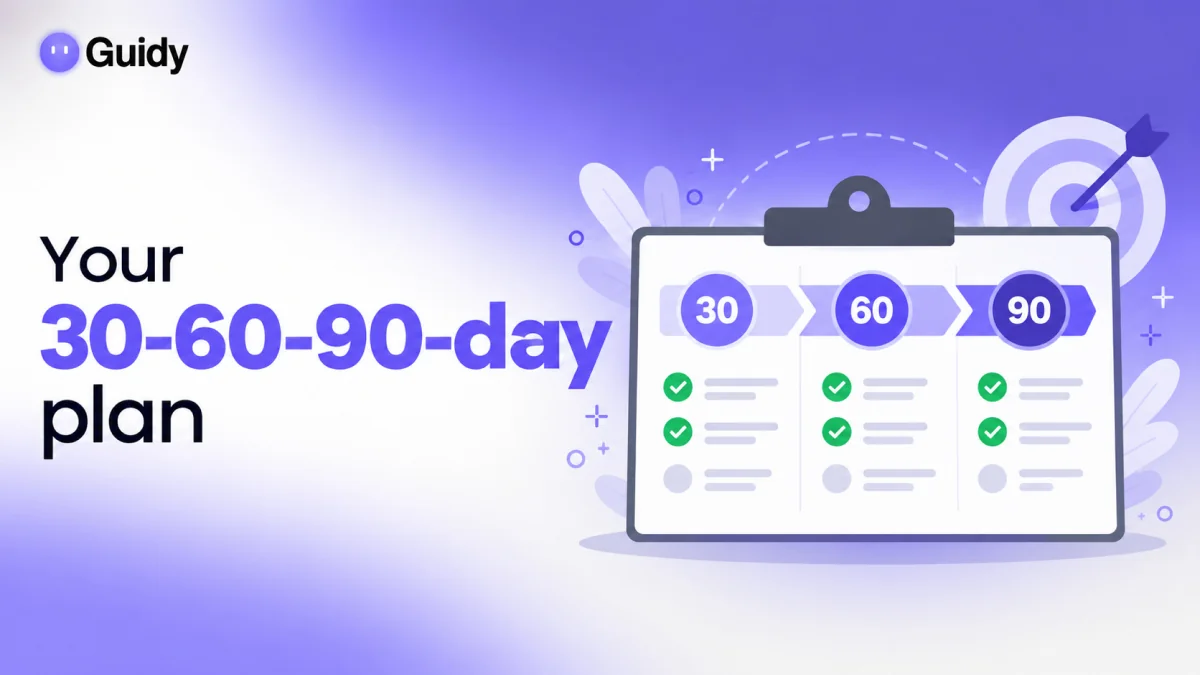
Two days before my last job started, my new manager emailed me: "Could you bring a rough plan for your first three months?" I stared at a blank doc for twenty minutes.
Here's the answer I wish I'd had. A 30 60 90 day plan is a one-page roadmap for your first three months in a new role: what you'll learn in the first 30 days, what you'll contribute by day 60, and what you'll own or lead by day 90.
What is a 30 60 90 day plan?
A 30-60-90 day plan splits your ramp-up into three phases, each with a clear focus and a few measurable goals. It's not a contract, it's a shared picture of what "settling in well" looks like.
The classic phases are:
- First 30 days: Learn. People, tools, processes, and how success is measured.
- Days 31 to 60: Contribute. Real work, early wins, and your first improvement ideas.
- Days 61 to 90: Lead. Ownership of a project or area, more independence, and goals for next quarter.
Some companies ask for one in interviews, others hand you an onboarding version on day one. Either way, writing your own shows you're thinking past week one.
30 60 90 day plan template (copy and paste)
This is the 30 60 90 day plan template I start from. I paste it into a doc, then swap the generic lines for specifics from my job description.
First 30 days: Learn
- Meet my manager, my team, and the five to ten people I'll work with most
- Learn the core tools and get access to every system I need
- Understand how my work is measured (KPIs, review cycle, what "good" looks like)
- Finish one small task to learn the process end to end
Days 31 to 60: Contribute
- Handle my regular responsibilities without daily check-ins
- Deliver one visible early win tied to a team goal
- Share two or three improvement ideas based on what I've observed
Days 61 to 90: Lead
- Own a project or process from start to finish
- Hit my first measurable target (name the actual number)
- Propose my goals for the next quarter
- Review this plan with my manager and agree on what's next
Pro tip: Keep each phase to three to five bullets. If a goal can't be checked off or measured, rewrite it until it can.
30 60 90 day plan examples
Here are two 30 60 90 day plan examples: one for an individual contributor below, and one for a new manager in the next section.
Example 1: A new marketing specialist
- First 30 days: Learn the brand guidelines, the email platform, and the analytics dashboard. Meet the sales and design leads. Audit the last three months of campaigns and note the baseline click rate.
- Days 31 to 60: Run the monthly newsletter on my own. Launch one A/B test on subject lines. Share three takeaways from the audit with the team.
- Days 61 to 90: Own the email sequence for the next product launch. Beat the baseline click rate I measured in month one. Pitch a content calendar for next quarter.
30 60 90 day plan for managers
A 30 60 90 day plan for managers looks different, because your job is the team's results, not just your own. The first month is mostly listening. Changing too much too fast is the classic new-manager mistake.
Example 2: A new team lead with six direct reports
- First 30 days: Hold a one-on-one with every report and ask what's working, what isn't, and what they need from me. Meet my peers. Learn the team's metrics and current commitments. Change nothing big yet.
- Days 31 to 60: Set a regular rhythm for one-on-ones and team meetings. Fix one quick, low-risk pain point the team raised. Share my early observations with my manager.
- Days 61 to 90: Agree on team goals for next quarter. Present a short proposal for the bigger changes I'd like to make, with my reasons.
How to write a 30 60 90 day plan for a new job
When I build a 30 60 90 day plan for a new job, I don't aim for perfect. I follow four steps:
- Start from the job description. The responsibilities listed there are the raw material for your day 60 and day 90 goals.
- Ask your manager one question: "What would make you say my first 90 days went really well?" Put the answer straight into the plan.
- Make goals measurable. "Learn the CRM" becomes "log every client call in the CRM by week three."
- Keep it to one page. Headed bullets beat paragraphs.
The first 30 days are usually the bottleneck, because there's so much new software at once. That's where Guidy, a screen-aware desktop assistant, saves me time: when I can't find a setting, I ask, and it points to the right button on my screen and explains the next step. It doesn't do the work for me. More in my guide to AI for starting a new job.
How to present your plan to your manager
I share my plan in the first week, framed as a draft: "Here's how I'm thinking about my first three months. What would you change?" That invites edits instead of judgment.
Then I bring it to check-ins at day 30, 60, and 90, marking what's done, what moved, and what I dropped. The plan becomes a living document, and performance conversations get easier.
When a 30-60-90 day plan won't work as written
A plan written before day one is an educated guess. Here's where it tends to break:
- Priorities shift. A reorg, a new boss, or an urgent project can make your month-two goals irrelevant. Update the plan instead of defending it.
- Some roles ramp slower. Highly technical or regulated jobs can take longer than 90 days before you're fully productive.
- Setup delays. If your laptop or logins take two weeks, your first 30 days slide too. Knowing which new hire paperwork to expect, and finishing it early, helps.
So treat your 30 60 90 day plan as a conversation starter, not a promise. If it helps you and your manager agree on what a good first three months looks like, it's done its job. And if you haven't started yet, my checklist for your first day of work covers what to bring and expect.
FAQs
What is a 30-60-90 day onboarding plan?
A 30-60-90 day onboarding plan is a version written by the employer, not the new hire. It lists the training, meetings, and milestones the company expects you to hit in your first three months. If you get one, use it as your base and add your own measurable goals on top.
What is a good 30 60 90 day plan for managers?
A good plan for managers starts with listening: one-on-ones with every report, meetings with peers, and learning the team's metrics. Month two adds a team rhythm and one quick fix. Month three sets team goals and proposes bigger changes, backed by what you learned.
How to make a 30 60 90 day plan?
To make a 30 60 90 day plan, split your first three months into learn, contribute, and lead phases. Pull goals from your job description, ask your manager what success looks like, and write three to five measurable bullets per phase. Keep it to one page and review it at each milestone.