First Day of Work: What to Bring, Wear and Expect
No time for long YouTube tutorials? Try Guidy and get it all done in minutes. It sits right on your screen and points you to exactly what to do in real time. And it works on any software or browser, in any language.
Try for free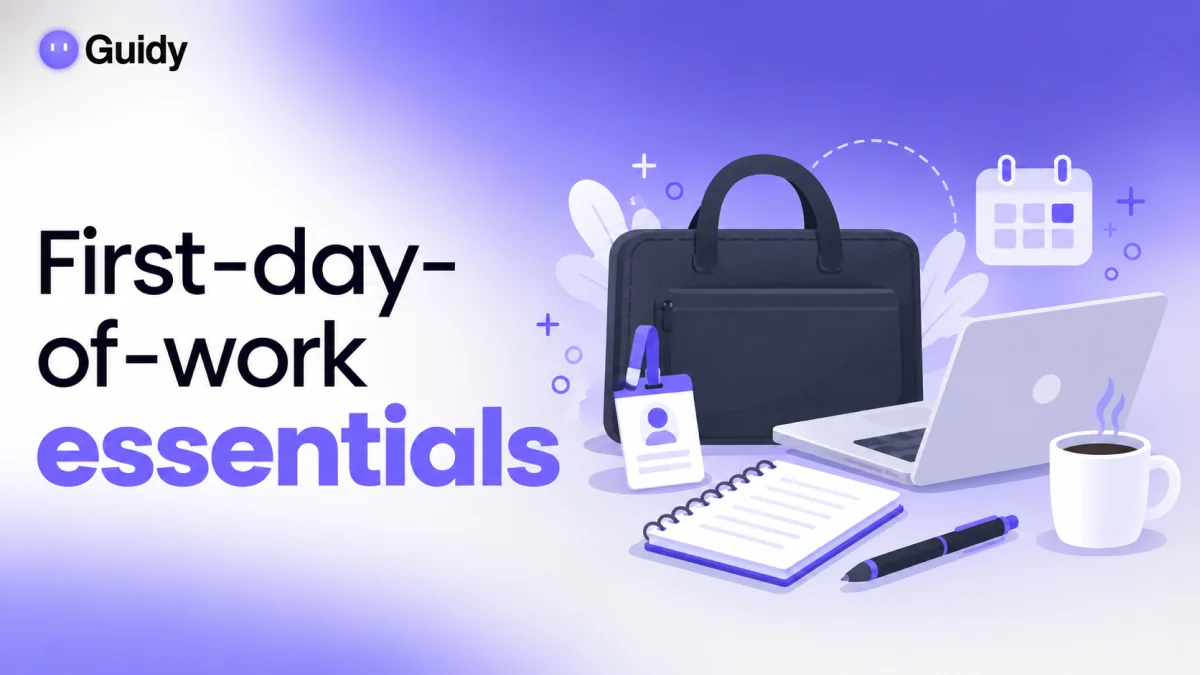
The night before my last first day, I changed my outfit three times and still forgot my passport for the I-9. HR was kind about it. I was mortified.
Here's the short version so you don't repeat that. Your first day of work is mostly paperwork, introductions, and setup. Bring your ID documents, bank details, a notebook, and a charger, dress to match the team's dress code, and plan to listen more than you talk.
What to expect on your first day of work
Most first days follow a similar pattern, whether the company calls it orientation or not. Knowing the shape of the first day of work takes a lot of the nerves out of it.
Here's what usually happens:
- Welcome and tour. Someone meets you, shows you around, and maybe hands you a badge.
- HR and paperwork. Finishing Form I-9 and anything left in the HR portal.
- Equipment and logins. Laptop, email, chat, and the main tools your team uses.
- Meeting your manager and team. Often a one-on-one, plus a team lunch or coffee.
- Light reading. The employee handbook, team docs, maybe a training module.
Nobody expects you to produce much. Day one is about getting set up and learning names.
What to bring on first day of work
This is what to bring on first day of work, based on what I've actually needed:
- ID documents for Form I-9. Either one List A document (like a US passport), or one List B document (like a driver's license) plus one List C document (like an unrestricted Social Security card). Bring originals, not photocopies.
- Bank details for direct deposit: your routing and account number, or a voided check.
- Emergency contact info for one or two people.
- A notebook and pen. You'll hear a lot of names and acronyms.
- Phone charger, plus a laptop charger if you're bringing a device.
- Lunch, or a way to pay for it, in case there's no team lunch.
- A water bottle and a small snack.
- Your start-day email with the address, start time, and who to ask for at reception.
Still unsure what to bring to first day of work? Email your recruiter or HR contact the week before. They get this question all the time. For the forms themselves, my guide to new hire paperwork explains the I-9, W-4, and the rest.
What to wear on first day of work
What to wear on first day of work comes down to one rule: match the dress code, then go one small step dressier. You want to look like you belong on the team, not like you're heading to an interview at a different company.
How I figure out the dress code:
- Ask. "What's the usual dress code for the team?" is a completely normal question for your recruiter or manager.
- Look for photos on the company's careers page or social accounts.
- Default to business casual if you're unsure: chinos or dress trousers, a button-down shirt or blouse, and clean, simple shoes.
- Wear comfortable shoes. Office tours involve more walking than you'd think.
If you're starting remotely, you'll still be on camera, so wear what you'd wear to a video interview.
First day of work tips
These first day of work tips are the habits that made my own first days smoother:
- Do a test run of your commute a few days before, and aim to arrive 10 to 15 minutes early.
- Write down names and roles as you meet people. Nobody minds.
- Ask good questions. "How do you prefer to communicate?", "What does a great first month look like?", and "Who should I go to when I'm stuck?" all land well.
- Don't overpromise. Say you'll look into things rather than committing to deadlines on day one.
- List your new tools, not your passwords. If the company provides a password manager, set it up early.
- Start thinking about goals. Ask your manager what success looks like at 90 days. That's the seed of your 30 60 90 day plan.
How a remote first day of work is different
A remote first day of work swaps the office tour for setup. Your laptop usually arrives by courier a few days before, and your login details come by email or text.
Expect a lot of firsts at once: signing in, setting up two-factor authentication on your phone, installing the VPN, joining Slack or Teams, and opening the HR portal. IT often runs a setup call, and your intros happen on video.
Setting up a dozen unfamiliar apps alone is where I get stuck the most. That's when I use Guidy: I ask where a setting lives, it looks at my screen (only when I ask), points to the right spot, and tells me what to click next. I still do the clicking. I've written more about it in my guide to AI for starting a new job.
First day of work checklist
Here's a quick first day of work checklist to run through the night before and the morning of:
- I-9 documents packed (List A, or List B plus List C)
- Bank details and emergency contacts ready
- Outfit picked, matched to the dress code
- Bag packed: notebook, pen, chargers, water, lunch
- Address, start time, and contact name saved on my phone
- Commute planned, with a buffer
- For remote starts: laptop charged, Wi-Fi tested, camera and mic working
When first day of work advice doesn't apply
This guide fits most office and remote jobs, but not every first day looks like this:
- Shift, retail, and warehouse jobs often start with safety training, and you may need specific shoes or protective gear. Ask before you arrive.
- Separate orientation days. Some companies run group orientation on a different day from your first day with the team.
- Paperwork done in advance. Many employers now have you finish forms online before day one, so the morning might be all setup.
- Hybrid teams. Your first office day might not be your first day, so check where you're expected to be.
Whatever your setup, your first day of work isn't a test. Show up prepared, be curious, and let the week do the rest.
FAQs
Is orientation the first day of work?
Orientation is often your first day of work, but not always. Many companies run orientation on day one, covering HR forms, policies, and setup. Others hold a group orientation for several new hires on a separate date. If you're unsure, ask your recruiter whether orientation and your first team day are the same day.
What questions should I ask on my first day of work?
Good questions to ask on first day of work focus on how things run: how the team prefers to communicate, what a successful first month looks like, who to go to when you're stuck, and which tools you'll use most. Save questions about raises or time off for later, unless HR raises them.
How to prepare for first day of work?
To prepare for first day of work, confirm the start time, address, and dress code with your recruiter. Pack your I-9 documents, bank details, a notebook, and chargers the night before. Plan your commute with a buffer. If you're remote, charge your laptop and test your camera and Wi-Fi.